
- Windows
- Android
- Linux
- Ubuntu
- Vesa Mount
- Embedded Mount
- Panel Mount
Embedded Panel PC: Core Advantages and Installation Methods of Embedded Touchscreen Panel PCs
With the accelerating trend towards intelligent, automated, and visualized devices, embedded panel PCs have become a core component for front-end control and visualization interfaces of various devices. They integrate display and computing capabilities into a single structure, allowing direct embedding into cabinets, device housings, control panels, or wall-mounted terminals, offering advantages in high integration and space optimization.
To help companies better choose the appropriate installation method, this article will delve into the embedded characteristics of embedded panel PCs and compare the structural differences and usage scenarios of Panel Mount, Flush Mount, and VESA Mount. Furthermore, we will incorporate real-world industry data to illustrate how embedded panel PCs support the growth trends of these industries.
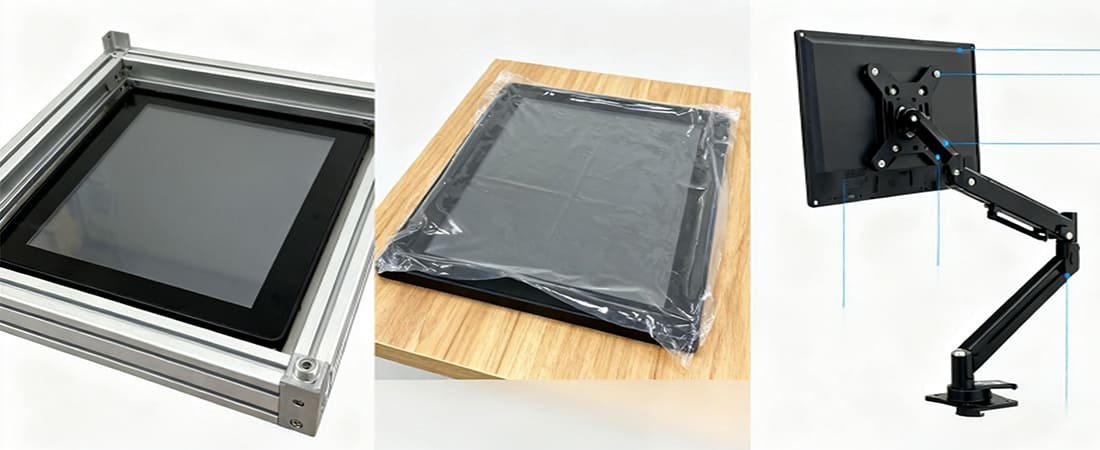
Why are Embedded Panel PCs Becoming Increasingly Important?
1. Smart Manufacturing Growth Drives Demand for Embedded Control
According to the Statista 2024 Smart Manufacturing Market Report, the global smart manufacturing market is projected to exceed $700 billion by 2030.
In smart manufacturing systems, the growing demand for equipment visualization, local control, and field operation terminals makes embedded panel PCs a key component for factory equipment upgrades.
Impact: Many production devices require front-end embedded panels for status display, process adjustment, and local interaction, driving the widespread adoption of embedded panel PCs.
2. Continued Growth in the Number of Automated Devices
IDC’s statistics on automated devices in 2023–2024 show that global shipments of automated devices continue to grow, with an average annual compound growth rate (CAGR) of 8%–10%.
Impact: More automated devices mean more machines require embedded touch terminals, and panel PCs are one of the most common field-level human-machine interface (HMI) windows.
3. Accelerated Expansion of Outdoor Information Terminals, Retail, and Self-Service Equipment
According to the Digital Signage Market Report (2024): The global outdoor self-service terminal market is projected to reach $54 billion by 2028.
Impact: Devices such as parcel lockers, payment terminals, and outdoor service stations all use embedded panel PCs as their front-end touch interface. This market growth provides stable demand for embedded panel PCs.
Core Embedded Features of Embedded Panel PCs:
① Integrated Design Reduces Wiring and Improves Integration
The touchscreen and processing module are integrated into the same unit, avoiding the space occupation and cable clutter caused by external displays and separate mainframes.
② Better Suitable for Device-Level Integration
The panel PC can be directly mounted on the rack surface or equipment casing, resulting in a more compact and cleaner appearance.
In smart manufacturing and automation scenarios, limited front-end space makes embedded structures a necessity.
③ Greater Environmental Adaptability
Fanless cooling structures are better suited for environments with high levels of dust, oil mist, metal shavings, and vibration, making them widely used in machining, food processing, and warehousing logistics industries.
④ Enhances Overall Equipment Value
As industries move towards digitalization, equipment manufacturers are increasingly inclined to integrate touch interfaces into the equipment itself; embedded panel PCs are the most direct solution.
Three Mainstream Installation Methods for Panel PC
1. Panel Mount
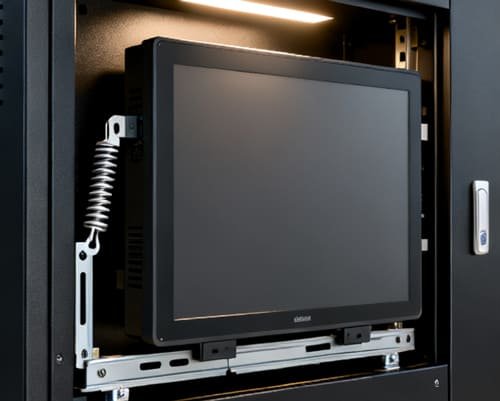
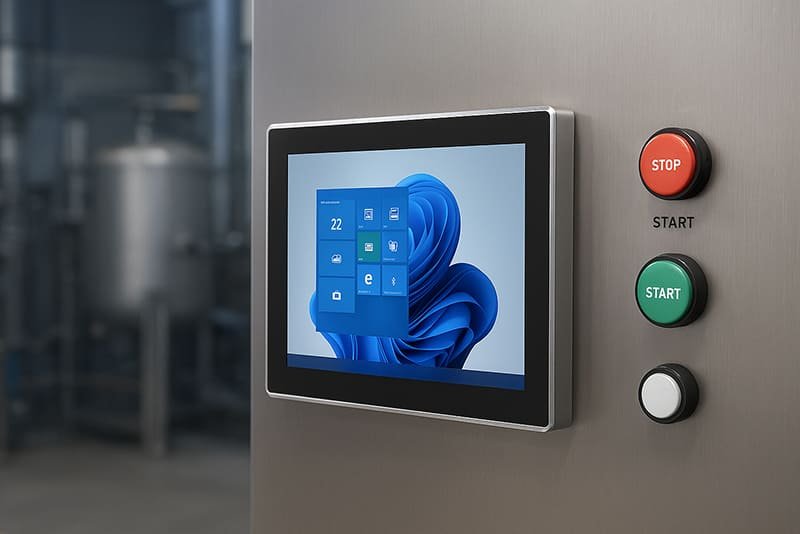
Structural Features: The front frame of the equipment is embedded in the cabinet or equipment panel opening. The front panel is secured using clamps, latches, or screws. Commonly used in equipment panels, control cabinets, terminal housings, etc.
Advantages: Highly integrated and aesthetically pleasing. Easy to clean and less prone to dust accumulation. Visually blends seamlessly with the equipment.
In the food and beverage processing industry, according to data from the Food Processing Equipment Market 2024, the industry maintains an annual growth rate of 6%–7%, making cleanliness and sealing key design trends.
The embedded panel mount design reduces gaps, making it ideal for scenarios requiring frequent cleaning.
Disadvantages: Installation requires precise drilling. Maintenance requires disassembly from the rear, involving multiple steps.
2. Flush Mount
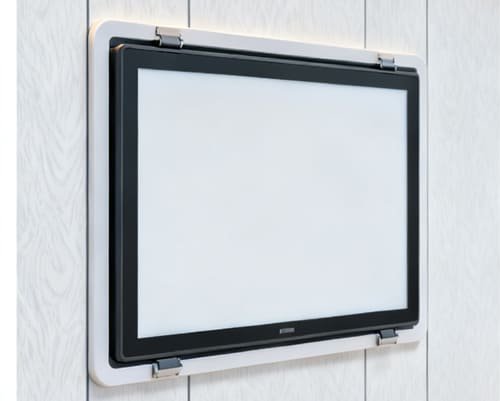
Flush mount is an extension of panel mount, emphasizing a “flat” visual effect.
Features: The front panel is almost completely flush with the cabinet or equipment casing.
Highest aesthetic appeal. Strongest cleanliness, suitable for industries with high cleanliness or hygiene requirements.
Applicable Industries: According to the Cleanroom Technology Market Report 2024, the cleanroom-related equipment market is projected to reach $8.3 billion by 2030.
These industries include pharmaceuticals, biotechnology, and optoelectronics manufacturing, which have a strong demand for flat, seamless surfaces; therefore, flush mount panel PCs are particularly popular in these applications.
3. VESA Mount
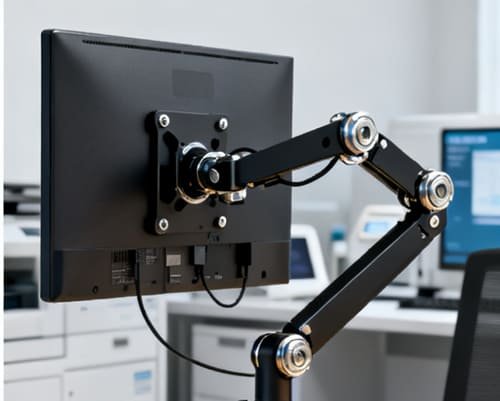
Structure
Uses VESA standard mounting holes (e.g., 75×75, 100×100)
Supports wall mounting, robotic arm mounting, and desktop bracket mounting
Flexible installation, adjustable angle
Advantages
No equipment drilling required
Freely adjustable tilt and direction
Suitable for external installation of information displays, wall-mounted terminals, and self-service machines
Industry Applications
Based on Logistics Automation Market 2024 data: The logistics automation market is projected to reach $116 billion by 2030.
VESA-mounted panel PCs are commonly used in warehouse wall-mounted terminals, picking workstations, mobile work carts, etc., where flexible installation is required.
Disadvantages
Less neater than embedded structures
Unsuitable for equipment requiring a seamless appearance
Embedded panel PCs are core components in many high-growth industries, from smart manufacturing and retail terminals to medical and cleanroom applications. Industry data shows that front-end displays combined with touch interfaces are becoming an industry trend, and embedded panel PCs are the fundamental technology carrier of this trend. Whether using panel mount, flush mount, or VESA mount, choosing the correct installation method will directly affect the device’s integration, appearance, cleanliness, and user experience.
If you are looking for a more stable, aesthetically pleasing, and easily integrated touchscreen panel PC for your equipment, our professional team is ready to support you.
Whether using panel mount, flush mount, or VESA installation, we can provide multi-dimensional customization services based on your rack structure, environmental requirements, and system needs, including multiple sizes, brightness levels, system platforms, I/O ports, protection ratings, front frame design, and interface layouts.
Start your consultation now and let a customized panel PC create greater value for your products.
FAQs for Embedded Panel PC
1. What is an Embedded Panel PC?
An Embedded Panel PC is a compact touch screen computing device designed for equipment integration. It combines display, processor, storage, and I/O into one sealed unit for long-term, continuous operation.
2. What makes an Embedded Panel PC different from a standard panel-mounted computer?
An Embedded Panel PC is designed to be built directly into machinery or enclosures. It offers deeper installation space, stronger structural stability, and long-life components optimized for equipment-level integration.
3. Can the Embedded Panel PC operate in high-temperature environments?
Yes. Many models support wide temperature ranges such as –20°C to 60°C, suitable for factory equipment, automation systems, and outdoor kiosks.
4. Does the Embedded Panel PC support fanless design?
Yes. Fanless structures reduce dust buildup, extend service life, and improve stability in production environments.
5. What operating systems are supported?
Most Embedded Panel PCs support Windows, Linux, Ubuntu, and Android, depending on project software needs.
6. Are high-brightness screens available?
Yes. Options such as 800–1500 nits are available for strong-light, outdoor, or glass-covered equipment environments.