
- Windows
- Android
- Linux
- Ubuntu
- Vesa Mount
- Embedded Mount
- Panel Mount
Fanless Industrial Panel PC: Advantages and Applications of Touchscreen Fanless Industrial Panel PCs
In automated equipment, production lines, or control rooms, two common types of equipment are “industrial PCs” and “industrial panel PCs.” Although the names are similar, their uses and forms are significantly different.
Industrial PCs: Typically standalone computer hosts installed in server racks or control cabinets, responsible for large-scale calculations, data acquisition, and control logic.
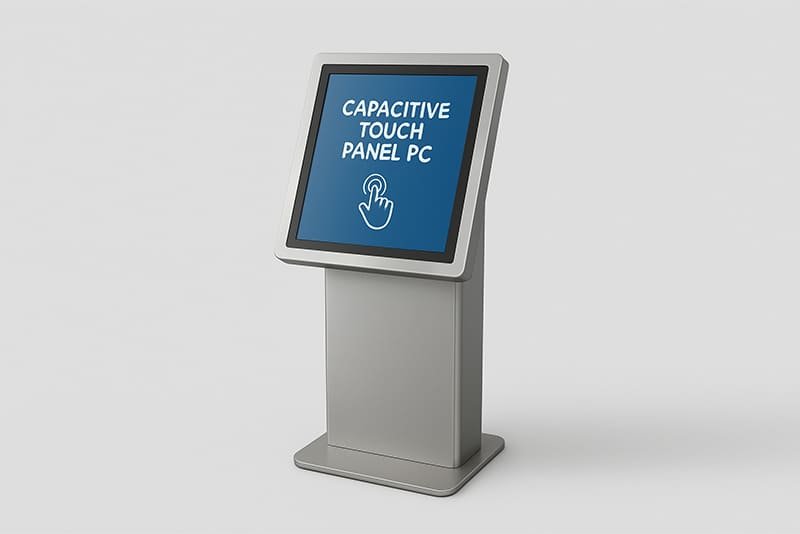
Industrial panel PCs: In contrast, they integrate a touchscreen display with the computer host, allowing users to directly operate, monitor, or control the device via the touchscreen. It serves as both a display device and a control node.
Therefore, this article focuses on “touchscreen industrial panel PCs,” rather than traditional industrial PCs.
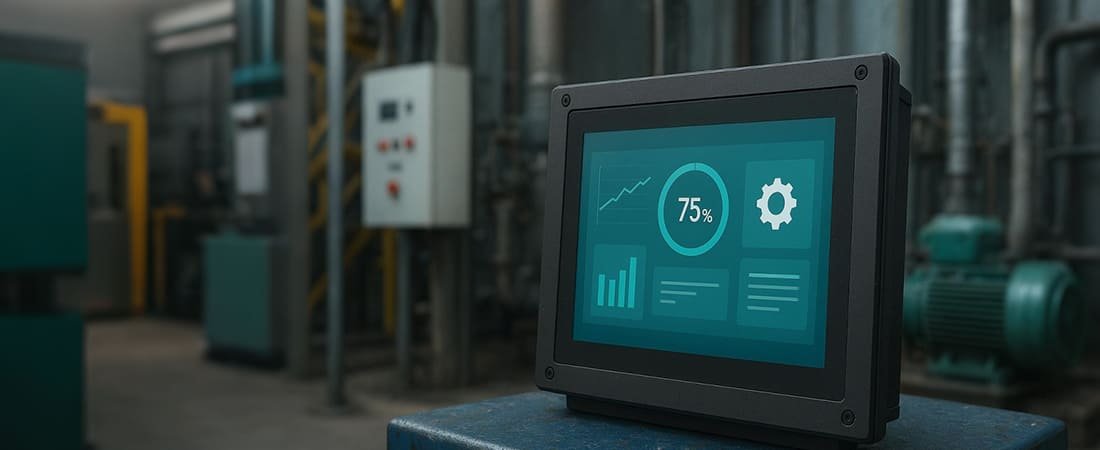
Why is fanless design important?
In industrial environments, equipment frequently faces challenges such as dust, vibration, high temperatures, and continuous operation. Traditional fan-cooled solutions are prone to becoming weak links in such environments. In contrast, fanless designs offer several significant advantages:
- Reducing Dust Intrusion: Fan-driven systems, which rely on fans to draw in air or expel heat, can easily draw in dust and debris, leading to reduced cooling efficiency or component failure. Research indicates that fanless industrial PCs, through passive cooling and a sealed design, can significantly reduce the intrusion of dust and debris.
- Improved reliability and reduced maintenance frequency: Fans are typically vulnerable components; fan failure, bearing wear, and dust accumulation can lead to heat dissipation failure. Fanless systems eliminate this weak link, thus increasing reliability.
- Better suited for harsh environments
Fanless systems perform better in scenarios with high vibration, extreme temperatures, or limited space. For example, passive cooling structures are more resistant to vibration. - Quiet and energy-efficient: The absence of a fan means virtually no mechanical noise, making it ideal for noise-sensitive environments or those requiring quiet operation. Furthermore, eliminating the power consumption of a fan and its control circuitry helps reduce overall power consumption.
Fanless Advantages of Touchscreen Industrial Panel PCs
In the application scenario of touchscreen industrial panel PCs (with touch operation and display interface), fanless design offers the following unique advantages:
- Simpler Integrated Design: Panel-type devices are typically installed at the front of the machine, in the operating interface area, or on the control panel, where they interact directly with the operator. Fanless design means fewer bezel openings and a more compact structure.
- More User-Friendly Operating Environment: Operators directly touch the screen; fan noise or a feeling of draft can negatively impact the user experience. A fanless design improves comfort.
- Reduced Front Panel Gaps and Improved Sealing: The front panel of a panel PC is often exposed to the operating environment, increasing the risk of dust, moisture, and accidental touch operations. A fanless, enclosed design makes it easier to achieve protection ratings such as IP65, thus improving durability. In fact, some data indicate that some panel-type devices have IP65 front panels and are fanless.
- Suitable for Space-Constrained Installations: Industrial panel PCs are typically installed on rack doors, walls, or machine sides. A fanless design reduces reliance on airflow paths, increasing installation flexibility.
Typical application scenarios
- Front end of the production line: Operators monitor and control production equipment via a touchscreen PC panel.
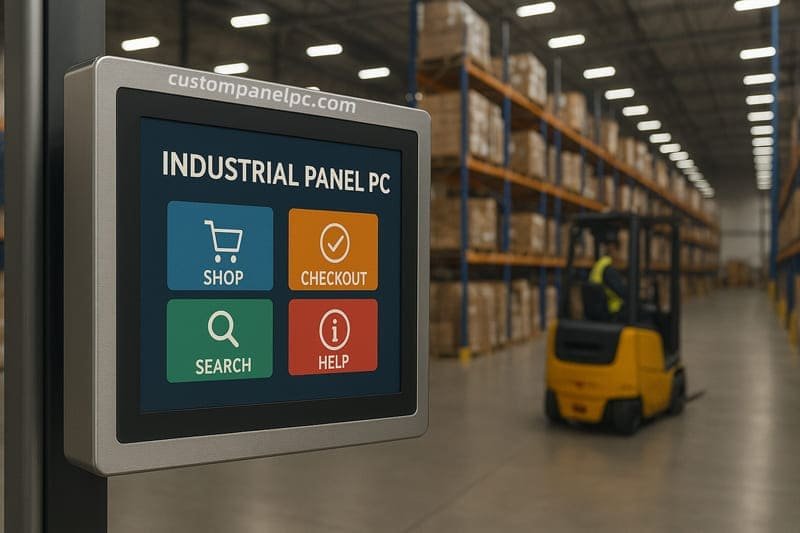
- Manufacturing workshop environment: High levels of dust, oil mist, and vibration; fanless PC panels are more suitable.
- Inside control cabinet doors or walls: Locations with limited space, requiring simple installation, and high maintenance difficulty.
- Control rooms or monitoring rooms requiring a quiet environment: Fanless solutions are superior.
Selection Considerations
- Cooling Capacity: Although fanless, a good thermal design (such as a large heatsink, metal casing, and proper airflow path) is still required to ensure stable operation.
- Environmental Protection Rating: In the presence of dust and moisture, it is recommended to choose a front panel protection rating of IP65 or higher.
- Installation Space and Ventilation: Although fanless, natural convection cooling is still necessary. Avoid installation in completely enclosed, poorly ventilated enclosures.
- Application Scenarios and Processing Performance Requirements: While touchscreen PCs integrate touch displays, if complex data analysis or image processing is required, it is still necessary to confirm whether the processor’s thermal design power (TDP) is suitable for a fanless setup.
Focusing on touchscreen industrial panel PCs with a fanless design, these systems are ideal for industrial automation, manufacturing environments, and human-machine interfaces. Unlike traditional industrial PCs, panel PCs emphasize the user interface and integrated display. The fanless design improves reliability, reduces maintenance costs, minimizes noise, and is more suitable for harsh environments. Real-world data shows continued market growth, making these devices a worthwhile consideration for industrial applications.
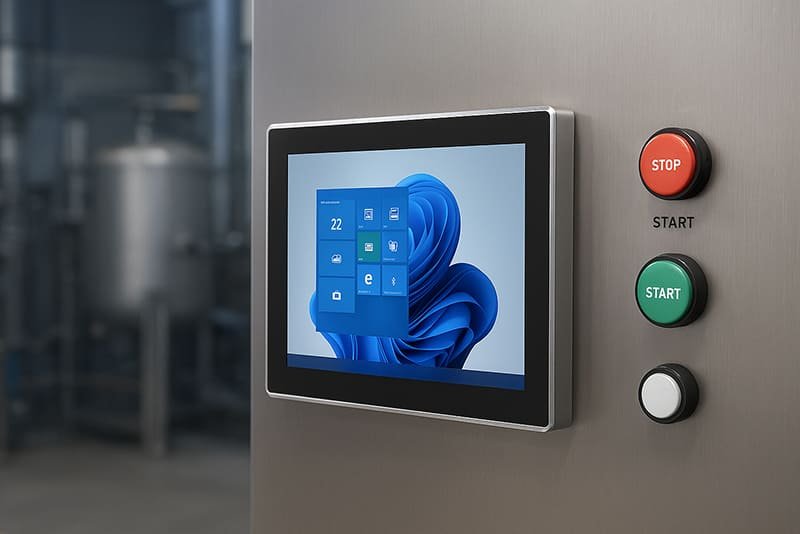
FAQs for Fanless Steel Panel PCs
1. What is a Fanless Steel Panel PC?
A Fanless Steel Panel PC is an industrial touch panel computer with a steel enclosure and no cooling fan, enhancing reliability and durability.
2. What are the advantages of fanless design?
Fanless design reduces dust intake, minimizes moving parts, and improves long-term stability.
3. Is the steel enclosure durable?
Yes. Steel housings provide robust protection against impact, vibration, and mechanical stress.
4. Can Fanless Steel Panel PCs be used in harsh environments?
Yes. They are suitable for factories, clean rooms, outdoor installations, and industrial automation.
5. Are they waterproof or dustproof?
Many models achieve IP65/IP66, providing protection against dust, water splashes, and cleaning procedures.
6. What operating systems can they run?
They commonly support Windows, Linux, Ubuntu, and Android.